Event

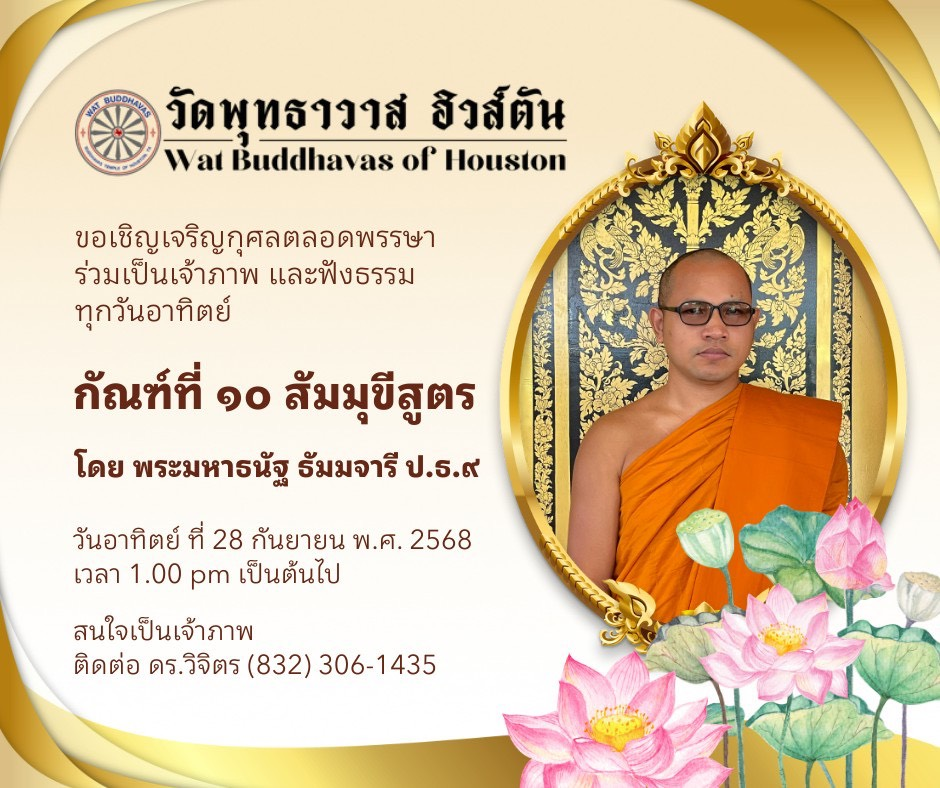
  • Chapter 10: Sammukhī Sutta – September 28, 1:00pm

    Chapter 10: Sammukhī Sutta – September 28, 1:00pm

    Join us for a meaningful evening of Dhamma reflection as we explore the Sammukhī Sutta. Together, we’ll contemplate the three qualities that bring abundant merit:

    1. Faith (Saddhā) — Confidence in the Buddha, the Dhamma, the Sangha, and in the law of karma.
    2. Generosity (Dāna) — Giving with a pure heart, offering material support to others.
    3. Worthy Recipient (Dakkhiṇeyya-puggala) — Giving to those who are truly deserving, such as noble monks who live virtuously.
  • Sart Thai merit-making festival – September 21, 10:00am

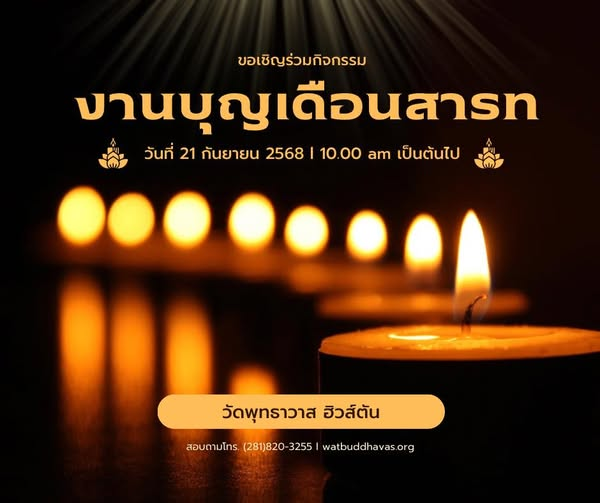
    Sart Thai merit-making festival – September 21, 10:00am

    Join us for a joyful celebration of tradition, gratitude, and community at our Sart Thai Festival, a cherished Thai cultural event honoring our ancestors and sharing merit with loved ones.

    Come experience:

    • Cultural performances and music
    • Participate in morning alms-giving
    • Merit-making ceremonies to honor our ancestors

    This is a time to reflect, reconnect, and rejoice together. Whether you’re Thai or simply curious about the beauty of our traditions, your presence will make the day even more meaningful.

    Bring your family, bring your friends—let’s celebrate the spirit of Sart Thai with warmth and gratitude.

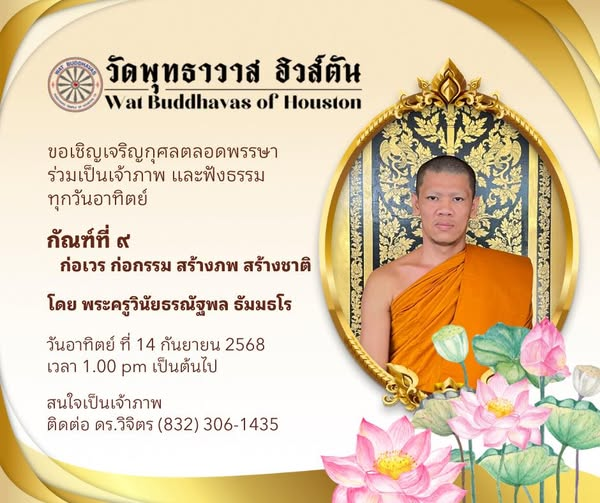
  • Chapter 9: Causing Karma, Creating Existence and Rebirth – September 14, 1:00pm

    Chapter 9: Causing Karma, Creating Existence and Rebirth – September 14, 1:00pm

    This is one of the most emotionally intense chapters in the Vessantara Jataka, highlighting the deep love and sacrifice within a family, and illustrating how karma and attachment perpetuate the cycle of rebirth.

    🌱 Reflections and Teachings

    • Parental love is profound and incomparable.
    • True generosity often requires painful sacrifice, but it leads toward spiritual liberation.
    • Every action carries karmic consequences—whether wholesome or unwholesome.
    • Understanding others’ suffering is the beginning of compassion and wisdom

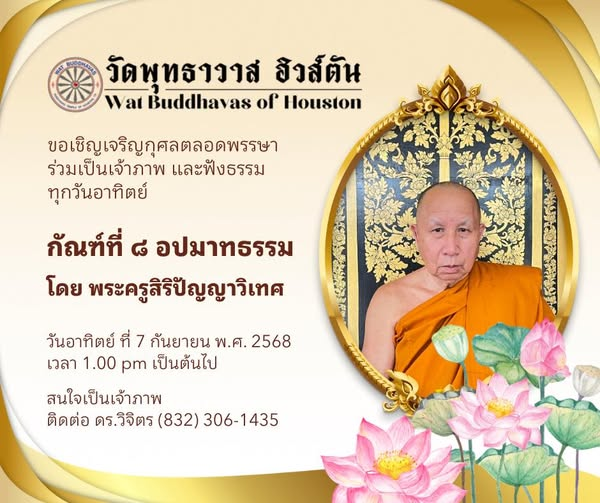
  • Chapter 8: Apamada Dhamma – September 7, 1:00pm

    Chapter 8: Apamada Dhamma – September 7, 1:00pm

    This is the eighth sermon in a series of Buddhist teachings, emphasizing the principle of “Apamada”—which means heedfulness or non-negligence. It’s considered one of the most vital virtues in Buddhist practice.

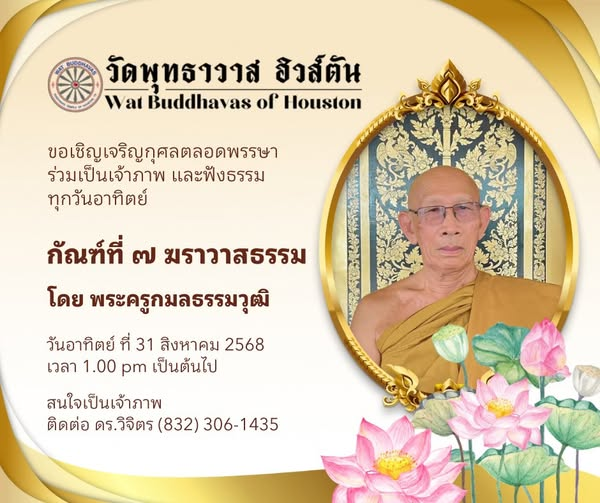
  • Chapter 7: Gharavasa Dhamma – August 31, 1:00pm

    Chapter 7: Gharavasa Dhamma – August 31, 1:00pm

    Gharavasa Dhamma refers to the ethical and spiritual principles that guide the lives of lay followers—those who are not ordained monks or nuns. These teachings help laypeople live harmoniously, cultivate virtue, and progress spiritually while engaging in worldly life.

    The four core principles of Gharavasa Dhamma are:

    1. Sacca (Truthfulness) – Being honest and sincere in speech and action.
    2. Dama (Self-control) – Restraining harmful impulses, especially in speech and behavior.
    3. Khanti (Patience) – Enduring difficulties calmly, without anger or frustration.
    4. Cāga (Generosity) – Sharing resources, time, and compassion with others.

    These values are often taught in sermons or recitations during traditional Thai Buddhist festivals, especially in the context of the Vessantara Jataka, where each chapter (กัณฑ์) conveys a moral lesson. Chapter 7 would be one of these, focusing on how laypeople can live ethically and meaningfully.

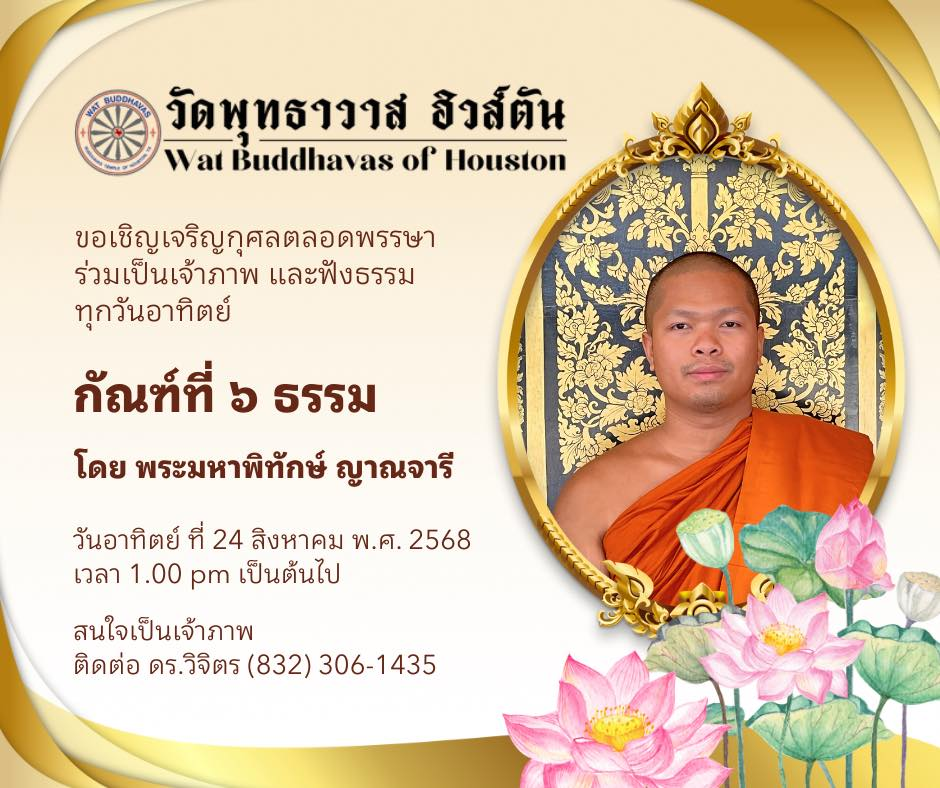
  • Chapter 6: Dhamma – August 24, 1:00pm

    Chapter 6: Dhamma – August 24, 1:00pm

    In Thai, the word Dhamma , ธรรม (pronounced tham), is deeply rooted in Buddhist philosophy and everyday life. It’s derived from the Pali/Sanskrit word Dhamma or Dharma, which broadly means:

    • The teachings of the Buddha
    • The natural law or truth
    • The path to liberation from suffering

    But in Thai culture, it goes even deeper:

    🧘 Core Dimensions of Dhamma

    AspectMeaning in Thai Buddhism
    Moral LawDhamma is the ethical foundation of life—truth, justice, and righteousness.
    Spiritual PracticeIt guides meditation, mindfulness, and the Eightfold Path toward enlightenment.
    Cosmic OrderNature itself is seen as following Dhamma—hence words like ธรรมชาติ (thammachat) for “nature.”
    Cultural ValuesThai words like วัฒนธรรม (wattanatham – culture) include “ธรรม,” showing how morality shapes society.

    📿 Everyday Influence

    • Language: Many Thai words use “ธรรม” as a root, infusing daily speech with spiritual meaning.
    • Behavior: Thai Buddhists strive to live in harmony with Dhamma—practicing compassion, generosity (ทาน), and mindfulness.
    • Ceremonies: Dhamma is central to temple rituals, sermons (เทศน์), and moral teachings passed down through generations.

    🛕 Living the Dhamma

    Thai Buddhists often engage with Dhamma through:

    • Listening to ธรรมบรรยาย (Dhamma talks)
    • Practicing สมาธิ (meditation)
    • Observing ศีล (precepts)
    • Reflecting on นิทานชาดก (Jataka tales) that illustrate moral lesson
  • Chapter 5: Sovereignty – August 17, 1:00pm

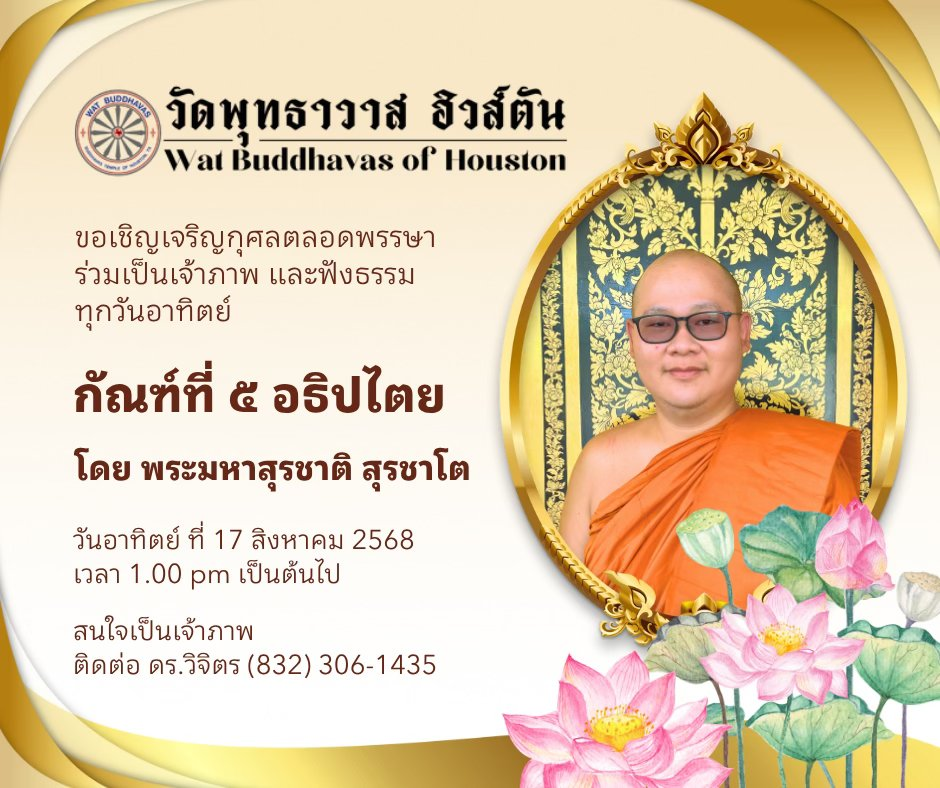
    Chapter 5: Sovereignty – August 17, 1:00pm

    In Buddhist philosophy, Sovereignty-อธิปไตย (Adhipateyya)- refers to forms of authority or guiding principles that govern one’s actions. The Buddha described three kinds of sovereignty or dominance:

    1. Attādhipateyya – Authority of the self

    • Acting based on personal conscience or inner wisdom

    • Example: “I will do this because I know it is right.”

    2. Lokādhipateyya – Authority of the world

    • Acting based on societal norms or fear of public opinion

    • Example: “I will do this because others expect it of me.”

    3. Dhammādhipateyya – Authority of the Dhamma (truth or law)

    • Acting based on the teachings of the Buddha

    • Example: “I will do this because it aligns with the Dhamma.”

  • Ceremony in Honor of the Royal Birthdays – August 10, 10:00am

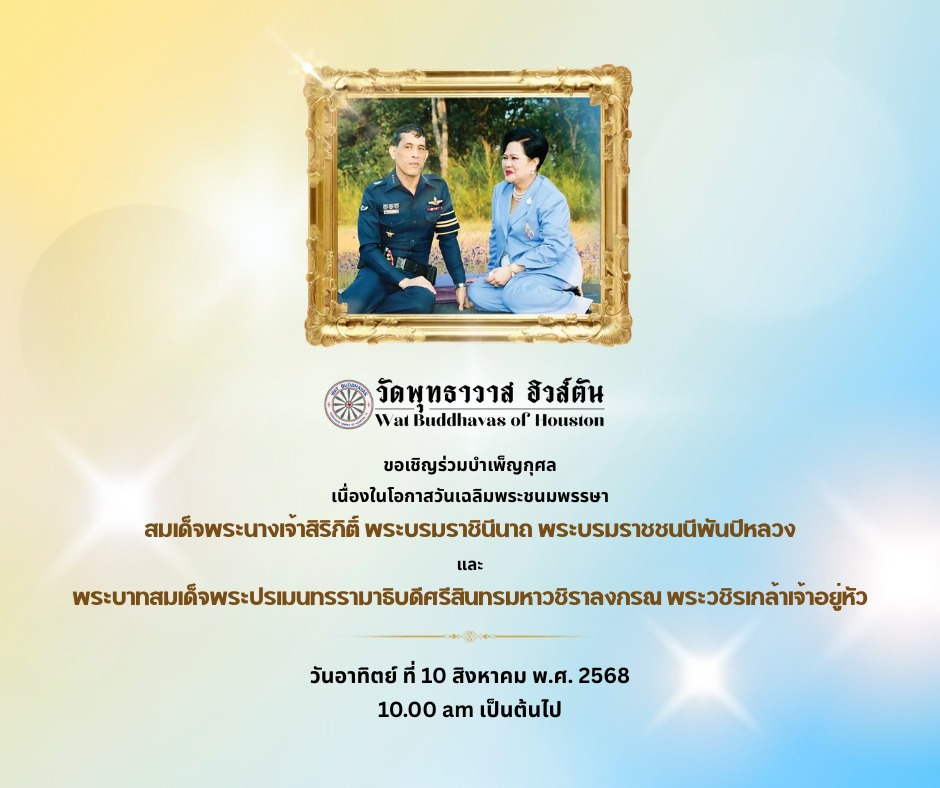
    Ceremony in Honor of the Royal Birthdays – August 10, 10:00am

    You’re invited to join in a merit-making ceremony on the occasion of the birthday celebration of
    Her Majesty Queen Sirikit, and
    His Majesty King Maha Vajiralongkorn.

  • Chapter 4: The Foundation Formula – August 3, 1:00pm

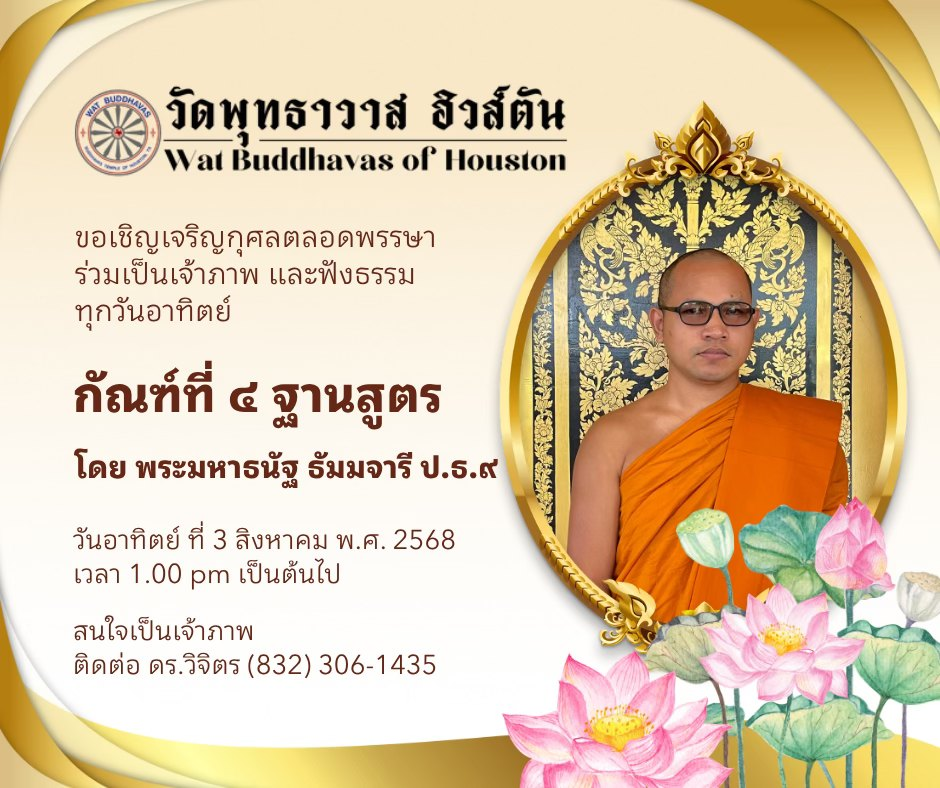
    Chapter 4: The Foundation Formula – August 3, 1:00pm

    “Foundation Formula” or “Subjects for Regular Reflections” often referring to a core teaching or principle in Buddhist scripture

    There are five subjects that should be reflected upon:

    1. I am subject to old age; I am not exempt from old age.
    2. I am subject to illness; I am not exempt from illness.
    3. I am subject to death; I am not exempt from death.
    4. I must be parted and separated from everyone and everything dear and agreeable to me.
    5. I am the owner of my kamma, the heir of my kamma; I have kamma as my origin, kamma as my relative, kamma as my resort; I will be the heir of whatever kamma, good or bad, that I do.

  • Chapter 3: Hatred is appeased by non-hatred – July 27, 1:00 pm

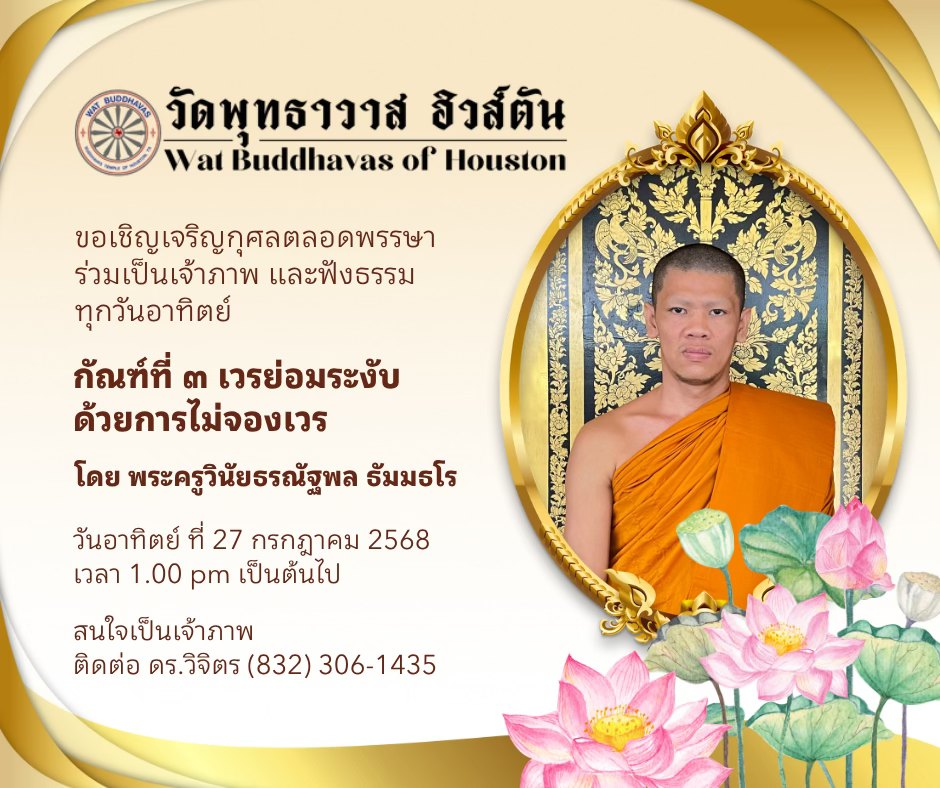
    Chapter 3: Hatred is appeased by non-hatred – July 27, 1:00 pm

    This is an important Buddhist teaching found in the Verses on Appeasement of Hatred. It teaches that conflict or hostility is not calmed by revenge, but by forgiveness and non-retaliation.

    🔥 The Cycle of Hatred

    The verse “Hatred is never appeased by hatred; it is appeased only by non-hatred” comes from the Dhammapada, verse 5. It’s not just poetic—it’s a psychological truth:

    • When someone harms us, our instinct may be to retaliate.
    • But retaliation fuels more anger, resentment, and suffering.
    • This creates a cycle of vengeance—each act of hatred invites another.

    Think of it like trying to extinguish fire with more fire. It only spreads

    🌿 The Power of Non-Hatred

    Non-hatred doesn’t mean passivity or weakness—it’s a conscious choice to respond with:

    • Forgiveness: Letting go of the desire to hurt back.
    • Compassion: Understanding that others act from their own suffering.
    • Patience: Giving space for emotions to settle before reacting.

    This breaks the cycle. It’s like pouring water on fire—cooling the heat of conflict

    🧠 Inner Transformation

    The Buddha taught that:

    • Holding onto anger is like grasping a hot coal—you’re the one who gets burned.
    • True strength lies in self-control, not in domination.
    • A peaceful mind is clear, creative, and free—able to find solutions beyond revenge

    🌍 Relevance Today

    This teaching isn’t just for monks—it’s for everyday life:

    • In relationships: Choosing understanding over blame.
    • In society: Promoting dialogue over division.
    • In leadership: Inspiring unity rather than fear.

    Even in global conflicts, peace begins with individuals who choose non-hatred